
FourthWave Founder Feature
Diana Gamzina, Ph.D., Founder and CEO of Elve, wants to bring the ability “to be connected no matter where you are”.

Who is Diana Gamzina?
Dr. Diana Gamzina is the founder and CEO of Elve, a company with the mission of bringing wireless ultra-high-speed connectivity to remote and urban areas. Elve is transforming the manufacturing of millimeter wave power amplifiers delivering high-efficiency and lightweight systems in larger quantities than had been possible before.
Prior to this, Dr. Gamzina was a staff scientist at the SLAC National Accelerator Laboratory for five years and a development engineer at the UC Davis millimeter-wave research group for over eight years leading research and development programs in the development of materials and manufacturing technologies for compact high frequency and high power millimeter wave sources. Dr. Gamzina's M.S. and Ph.D. were in the field of Mechanical and Aerospace Engineering, she also received the Early Career Research Award from the U.S. Department of Energy and holds thirteen patents related to the manufacture of vacuum electronic devices.
Why did you start your venture? What interested you in the problem?
I always tell the story of giving a talk about one of the technologies I was working on at the time. I was reporting this record-holding amplifier results at the European Space Agency workshop and the audience was mixed with academics and industry. After my talk, I talked to some of the industry folks. They were very excited about my technology but said they would never use it in any real-world application even though it technically solves their problem. When I dug deeper into that, they explained that the business case effectively doesn't exist. This was because the amplifiers that I was working on were not only too expensive but not available at the volumes that were necessary to build up the future networks.
After some time, I realized that my expertise is in manufacturing specifically these types of amplifiers but I was using that expertise to build world record devices rather than making them available for the masses. It generally is harder to perform that kind of research at National Lab focusing on cost-reduction because you're not doing work that gets you publications anymore. It was very fitting to build a company that effectively focused on developing manufacturing processes for amplifiers that are not recording-holding but still enabling.
What is the impact of that work going to be?
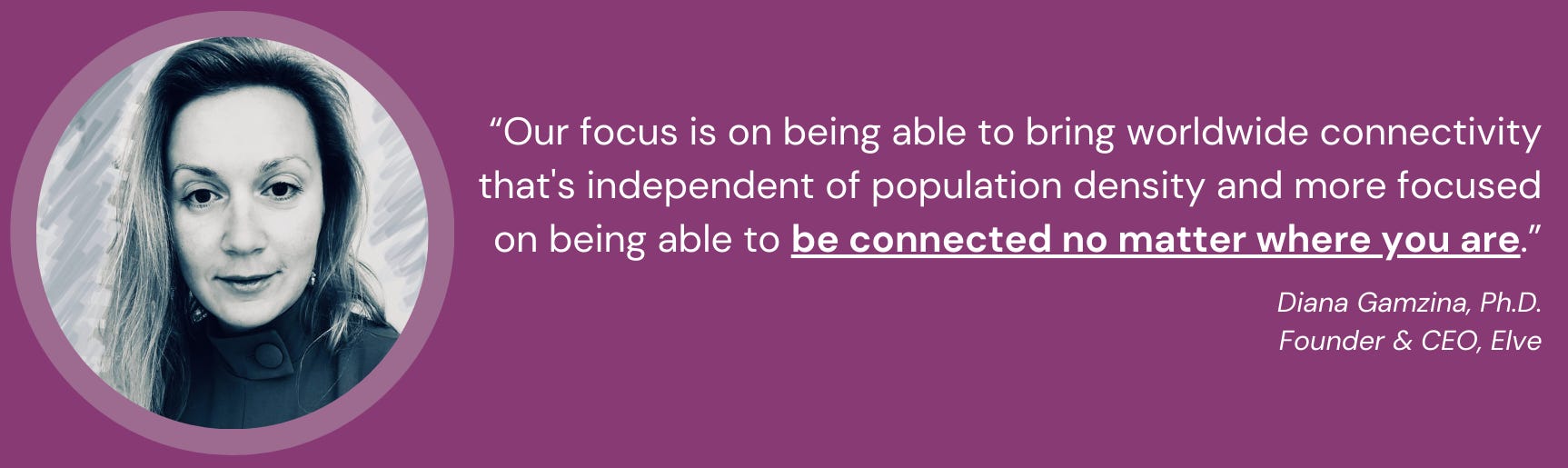
To date, we have been very good about focusing on highly populated areas to provide connectivity, but the minute you step out of a major city the connectivity drops significantly. So the focus is on being able to bring worldwide connectivity that's independent of population density and more focused on being able to be connected no matter where you are. For that, you need amplifiers like ours.
What are you currently working on?
We are halfway through our Series A growth stage. We just completed our Factory and have a grand opening in a couple of weeks. Deploying the factory and making the factory ship the product at a certain rate is the next big goal. We're working on military and space qualification of our products as well. So that's the next stage for the factory to be able to support those types of amplifiers too.
What did you like about being in the FourthWave program?
It's a program that's focused on developing deeper self-awareness and skills to cope with what it means to be a founder and the CEO of a rapidly growing and changing company that's going to be different as you go forward. Depending on the stage you're at and what kind of help you need, Fourthwave does a good job of focusing on your needs. They have a broad range of experts that can work with you and whatever it is. That's your challenge. They do a nice job of ensuring that there is a focus on your personal growth as a leader not just the growth of your venture.
How did you grow in the FourthWave program?
It's interesting that you recognize your strengths can also be weaknesses in some circumstances. For example, I can be very positive and forward-looking. I'm upbeat about whatever is coming our way, which generally seems like a positive thing. But if you're trying to solve problems and make sure the details are addressed, that can actually come off as a negative aspect. It can seem as if you're not paying enough attention to the details and the actual work that needs to be done.
So it built a recognition of how I participate strongly in the mood that is set for the company and defined my own strengths and weaknesses. Being aware of that and being able to compensate for it with others lead to my own growth.
Did the program help you figure out your leadership style?
I mean figure out as a strong word. I realized it would require forever learning. However, the program helped me to figure out at least the baby steps of where I could start from and in which direction I could grow.
How has the time with FourthWave impacted you after the program?
After the program, it took a while. We think we can change quickly like you learned something and I mean the reality of it is you can't implement it the next day. You can practice, but it takes time for it to set in. But it's something that's in my mind and I'm like, “There is this thing that I need to practice” and then you slowly start practicing it and so on, until it becomes a habit. It has this tail end of the effect of me working at myself in a certain direction, but also recognizing that it will take a while.
But that development also allows for growth and talking about self-compassion. I have definitely been promoting that in my company heavily. It's really easy to be self-critical and judge yourself for your progress. In the startup, it never feels like you're moving fast enough or doing enough (and by definition it never is right). So it’s working on being okay with where you are.
If you take the time off you can come back and think, “My God, there's this pile of work” or you can say “No, it's okay. I'm just gonna start from the beginning. Then, I'm gonna plan this pile out forward and suddenly you are back to being on track.” It's just the mindset shift of not beating yourself up for taking the time off. Some of the learnings since then I've also implemented in the company and making sure people are aware and using the mindset shift.
Do you think that trait of lacking self-compassion is pervasive in the founder community?
Yeah, I think it's part of being driven. So you're constantly self-evaluating and measuring yourself to your own expectations. I'm thinking of other founders that I know and we do have those conversations in private. I certainly have plenty of examples of self-criticism from both men and women, at least in my experience.
Would you recommend the FourthWave program to other founders?
Yeah, definitely. Of course, the majority of other founders that I know outside of Fourthwave are men. But I have talked to them and they have expressed envy on how this program doesn't just focus on what are the business cases and making sure you work through the math of success of your business, but that there's a significant portion of self-development as a leader. The other programs that they have attended definitely do not do that so there's a focus on other skills, but not as much on you as a human and being the best of yourself that you can be.
Yes, it's very great that we as women can get that knowledge of cultivating that advantage of being able to be more present and collected for our teams and (of course) the customers that our companies support.
What is new for Elve? Any exciting news?
The space qualification is exciting. It'll be cool to have our product in space. that would be very cool. Of course, growing is always a challenge, but fun, right?
Something that I always have my eyes on and then, look forward to the next factory after this one, it's probably a few years out, but it's definitely on the roadmap.
Connect with Diana on LinkedIn to learn more about Elve and what they’re working on!